If your sales team is grinding while your product just sits there, something’s off. In successful SaaS companies like Slack, Notion, and Zoom, the product is the primary growth engine—not just a feature showcase.
These companies grow up to 30% faster and achieve 2x higher valuations by putting their products in the driver’s seat. But PLG (Product-Led Growth) isn’t just about launching a free trial or freemium tier—it’s a shift in mindset and execution across functions.
Why PLG Matters More Than Ever
Today’s buyers behave differently. They want to try before they buy, experience value within minutes, and self-serve through their journey. If your product still requires a sales call to get started, you've already lost users.
Think about it: when was the last time you called a sales rep to try a new tool?
Common Pitfalls That Kill PLG
Most PLG failures share a few traits:
- For Product Managers: Your product is too complex. If users can't discover value quickly, they churn before you get feedback.
- For Marketing Teams: You focus on MQLs, not on product engagement or onboarding flows.
- For Sales Teams: You wait for hand-raisers, but your best leads are already using the product.
- For Data Teams: You can't track what matters such as activation, retention, or feature usage.
PLG Readiness Checklist
Is your platform built to sell itself?
1. Is onboarding fully self-serve and guided in-product?
- Yes: step-by-step flows, tooltips, and contextual nudges guide users to value.
- No: Onboarding depends on external resources, cumbersome integrations or manual walkthroughs.
2. Is your platform context-aware and responsive to user behaviour?
- Yes: The product adapts to user roles, progress, or use cases with dynamic experiences.
- No: Every user sees the same generic experience, regardless of need.
3. Do you track user actions and product usage end-to-end?
- Yes: You’ve instrumented key events, workflows, and funnels with tools like Segment, Amplitude, or Mixpanel.
- No: You rely on incomplete or fragmented analytics.
4. Is your product architecture modular and scalable?
- Yes: You support usage-based growth, feature gating, and seamless upgrades.
- No: Monolithic builds make it hard to iterate, scale or personalize plans.
5. Do you have an integrated platform that supports cross-functional needs?
- Yes: Product, marketing, and sales can access shared user data and workflows.
- No: Teams operate in silos, relying on disconnected tools.
Great PLG doesn’t just happen, it’s engineered. If your platform isn’t designed for context, clarity, and connection, your product won’t scale itself.
Is Your Tech Stack Ready for PLG?
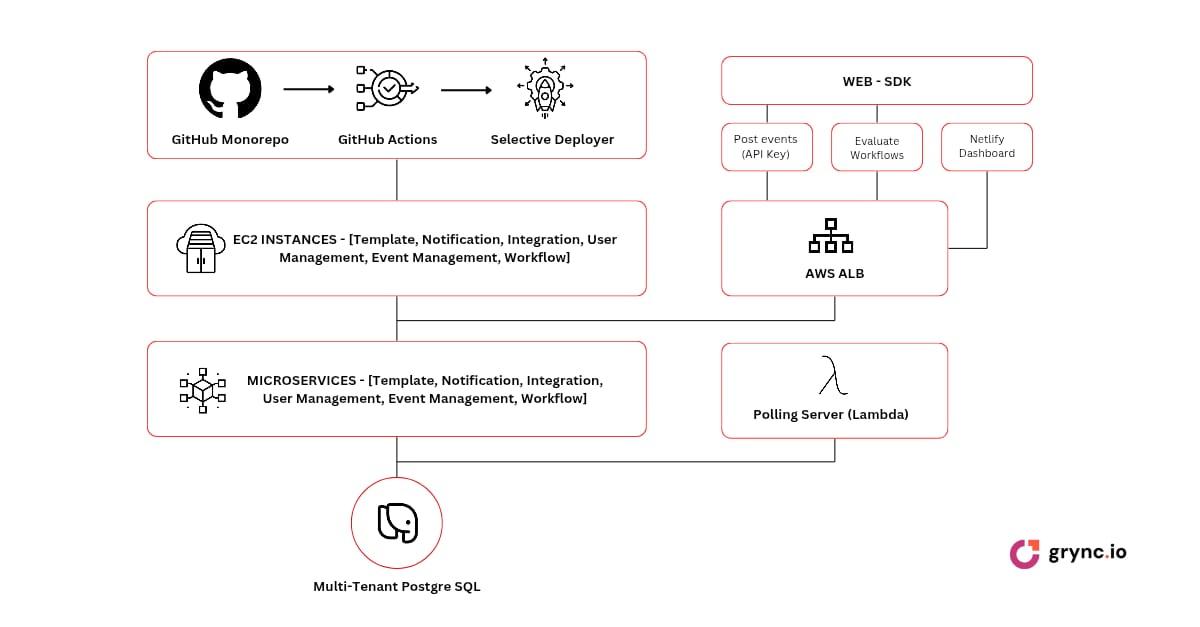
Grync.io helps you check the boxes. Grync.io helps you turn your tech stack into a PLG-ready engine by solving five core challenges:
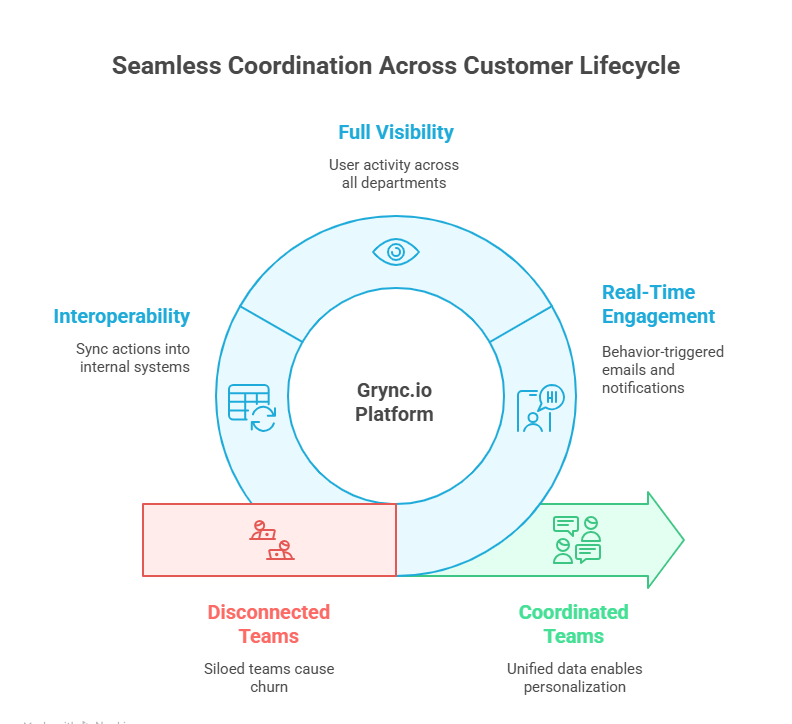
- Hyper-Connected Platform: Grync.io connects with your app, web analytics and third-party tools to unify product data, no more data silos.
- Frictionless Onboarding: Trigger real-time nudges, tooltips, and emails based on user behaviour and reduce time-to-value.
- Context Awareness: Auto-capture and segmentation deliver context-aware insights, enabling timely, relevant user actions.
- Workflow Automation: No-code builders let you create behavioural triggers that launch campaigns, update CRMs, or notify sales.
- Scalability: From early-stage activation to enterprise upsells, the growth starts with your user base and complexity.
With Grync.io, your product becomes the engine of growth. Propel product-led growth with a platform built to engage, convert, and expand—right from the product experience.
Contact us to get started info@grync.io.
#PLG #ProductLedGrowth #SaaS #ProductMarketing #GrowthStrategy #CustomerExperience #ProductAdoption

 Preview Post