 Preview Post
- May 20, 2025
A Founder CTO's honest take on why your customer tools don't talk to each other.
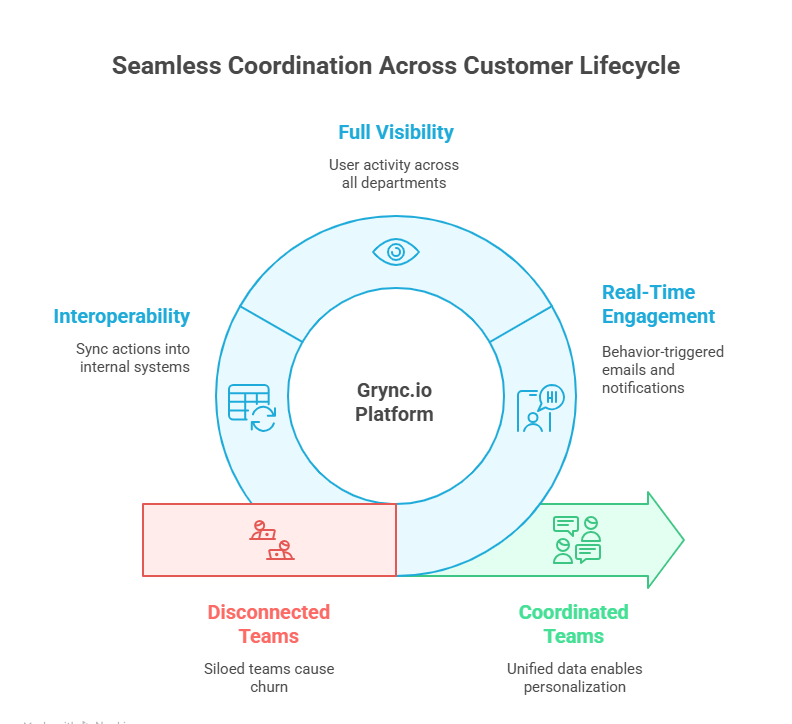
I'll be brutally honest with you—after years of building products and losing sleep over customer churn, I think I've "partially" figured out the real problem. It's not that our competitors have better features or that our pricing is off. It's something far more frustrating: our customers are getting a completely disjointed experience because none of our tools actually communicate with each other.
Here's the truth: 73% of customers expect better personalization (Source: 24 Digital Customer Experience Stats To Know For 2024 | TELUS Digital ) and seamless experiences across every touchpoint. But here's what we're actually delivering—a mess of disconnected tools that make us look completely unprofessional.
We've all been there. Sales closes a deal, but the customer keeps getting "getting started" emails. Support helps with a bug, not knowing they just discussed an upgrade. Marketing sends promos while they're trying to cancel. We've accidentally built customer experiences that work against us.
Each team is flying blind, and customers feel like they're talking to strangers every time (Source: 86 % of IT leaders say software sprawl is getting out of control and are creating financial strain and security risks but consolidation is now a high priority | ITPro ). As the CTO, guess who gets to fix this technical mess that's causing real business damage?
The solution isn't rocket science—our tools just need to actually talk to each other.
Every SaaS CTO knows/augments this pain. You've got 10+ tools in your customer stack. Each one works great alone, but together they're a mess of:
Your customer doesn’t see “tools”—they see “one experience”. However, your architecture doesn’t support that stark reality.
Instead of building another tool, I asked: what would proper coordination look like?
We built Grync.io with Spring Boot microservices—not for the buzzword, but because coordinating external systems needs fault isolation and independent scaling.
Here's how it actually works: One service handles real-time events, another manages customer data, and a third orchestrates workflows between them. When Salesforce inevitably changes their API again, you update one service instead of hunting down every integration across your entire stack.
It's the difference between fixing one broken pipe versus replumbing your entire house every time something breaks.
Our SDKs capture what users do and instantly share that context everywhere. Click a button in your app? Your CRM, email platform, and support system know immediately. No delays, no sync gaps.
This is the interesting part. SyncTriggers™ let you create rules like: "If user hits upgrade but doesn't check-out, send helpful email, update CRM, and show in-app discount."
All this happens automatically, in real-time, across all your systems. No manual coordination, no dropped contexts.
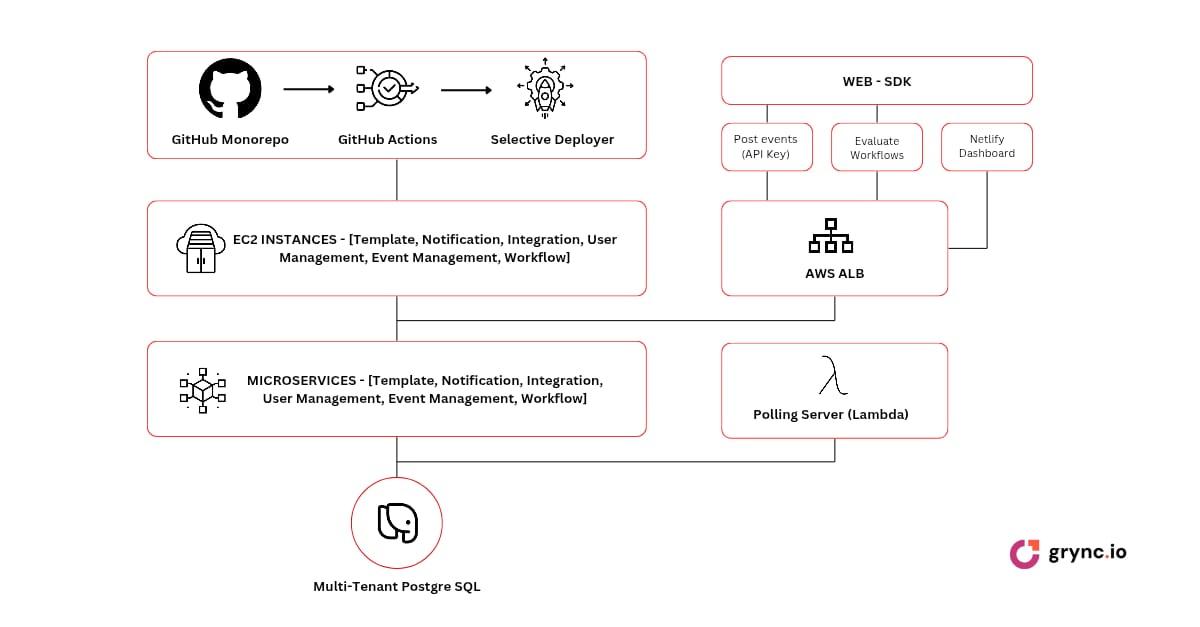
Post implementation of Grync.io:
But here's the kicker—our dev team went from spending two full days every week fixing integrations to maybe two hours a month. That's developer time we got back to actually build features.
The result? Trial conversions jumped 60% because onboarding finally felt like one smooth experience instead of a bunch of random, disconnected steps.
When your tools actually work together, everything just clicks.
As CTOs, we balance feature velocity with system reliability. Every new tool adds integration complexity and maintenance overhead.
Grync.io gives you the coordination layer so existing tools work like one system. Your team builds features instead of maintaining integrations. Your customer experience becomes consistent. Your metrics improve because your architecture finally supports your customer journey.
The winners won't be companies hoarding the most tools—they'll be the ones with the best coordination between tools. And, great customer experiences shouldn't require architectural compromises.
If you want to see grync.io in action, reach us at info@grync.io.
#ProductGrowth #ProductLedGrowth #GoToMarket #GTMStrategy #ScaleWithPLG #ProductAdoption #ProductLeadership #ProductManagement